

Learning to read is a gradual process.
At first, children may need to concentrate hard on every letter, sound and word.
Over time, with appropriate phonics instruction and plenty of meaningful reading practice, reading begins to feel easier.
But how can you tell when your child is becoming a fluent reader?
Reading fluency is more than simply reading quickly.
A fluent reader is becoming increasingly able to read words accurately and automatically, maintain an appropriate pace, group words into meaningful phrases and use expression when reading aloud.
These skills help children direct more of their attention towards understanding what they read.
The good news is that there are plenty of signs you can notice during everyday reading at home.
Signs Your Child Is Becoming a Fluent Reader
There can be a moment when reading suddenly starts to feel a little different.
Your child pauses less often.
Familiar words seem to pop straight off the page.
They might read a sentence without stopping to work out every word—or suddenly use a funny voice for a character without being asked.
These little changes can be easy to overlook, but they are important signs that your child’s reading skills are developing.
Reading fluency doesn’t appear overnight.
It grows gradually as children become more confident with decoding, recognise familiar words more automatically and learn to read text in a way that sounds increasingly natural.
So, what should you look for?
Here are some of the everyday signs that your child may be moving from effortful reading towards becoming a more fluent, confident reader.
What Is Reading Fluency?
Reading fluency describes the ability to read text accurately, smoothly and with appropriate expression.
The Australian Curriculum describes developing fluency as becoming progressively faster, smoother, more accurate and expressive when reading increasingly complex texts aloud.
Fluency is often described using three important components:
- Accuracy – reading the words correctly
- Automaticity – recognising familiar words with little conscious effort
- Prosody – using appropriate phrasing, pausing, intonation and expression
These skills develop gradually rather than appearing all at once.
A child might read words accurately but still sound slow and effortful.
Another child might read familiar books quite smoothly but need support when encountering unfamiliar words.
That is completely normal.
Free Printable Placemat

Stage 2 Placemat: Beginners Digraphs
A fun consonant diagraphs resource for beginners learning to read, write and spell! Includes voiced and unvoiced ‘th’ digraphs.
9 Signs Your Child Is Becoming a Fluent Reader
1. Your child needs to sound out fewer familiar words
One of the first things you may notice is that your child is no longer sounding out every single word.
Instead of:
c-a-t… cat
they may simply recognise ‘cat’ immediately.
This doesn’t mean your child will never sound out a word again.
Decoding remains an important strategy, particularly when children encounter unfamiliar words.
The change is that familiar words are increasingly recognised automatically.
As word recognition becomes more automatic, children have more attention available for understanding the sentence and the story.
2. Reading sounds less effortful
Early reading can sound quite laboured.
Your child may pause frequently, stretch out sounds and concentrate intensely on each word.
As fluency develops, reading often becomes noticeably easier.
You might hear your child:
- move from one word to the next more smoothly
- pause less frequently
- spend less time working out familiar words
- read longer sentences without becoming as tired
- maintain their place more easily
- appear more relaxed while reading
It can be helpful to listen for ease rather than speed.
A child doesn’t need to read as quickly as possible to be a fluent reader.
3. Your child begins reading in phrases
A developing reader may initially read like this:
The / little / dog / ran / down / the / street.
With increasing fluency, you may hear:
The little dog / ran down the street.
The words begin to be grouped into meaningful phrases rather than being read as a series of individual words.
This is an important step because fluent reading begins to sound more like natural language.
The Australian Curriculum’s literacy progression includes increasingly sophisticated phrasing as children develop reading fluency.
4. Your child uses expression
Another lovely sign is when reading starts to sound like talking.
Your child might:
- raise their voice for a question
- pause at a full stop
- sound surprised when a character is surprised
- use a different voice for a character
- emphasise important words
- change their tone depending on what is happening
This is sometimes called prosody.
Expression isn’t simply about making reading entertaining.
Appropriate phrasing, pauses, stress and intonation are important components of fluent oral reading.
5. Your child pays attention to punctuation
As reading becomes more fluent, punctuation begins to influence how your child reads.
You may notice that they naturally:
- pause at commas
- stop at full stops
- change their voice for questions
- respond to exclamation marks
- use quotation marks as a cue for dialogue
Rather than treating punctuation as something they need to consciously remember every time, children increasingly incorporate it into their reading.
6. Your child can correct themselves
Self-correction is another positive sign.
Your child might read:
“The dog ran to the gate.”
Then stop and say:
“Oh, it says goat!”
They have noticed that what they read doesn’t make sense and gone back to fix it.
This shows that your child is not simply saying words from memory.
They are monitoring their reading and checking whether it makes sense.
The ability to reread and self-correct is part of developing effective reading behaviours.
7. Your child can concentrate more on the story
Perhaps one of the most exciting changes for parents is seeing reading become less about working out every word and more about what is happening in the story.
You may notice your child:
- laughs at something they have read
- predicts what might happen next
- notices something surprising
- talks about a character
- asks questions
- connects the story to their own experiences
- remembers details from earlier in the book
This is an important shift.
Fluency isn’t the final goal of reading.
It helps make comprehension possible because children have more cognitive attention available for constructing meaning from the text.
8. Your child can read familiar books with increasing confidence
You may find that your child wants to read the same favourite books again and again.
This repetition can be valuable.
Repeated exposure gives children opportunities to practise decoding, recognise familiar words more automatically and develop smoother phrasing and expression.
You might notice that a book that once required considerable effort now sounds much more natural.
That’s progress!
9. Your child is becoming more confident with unfamiliar text
Fluency doesn’t mean that your child will know every word.
In fact, encountering unfamiliar words is an important part of becoming a stronger reader.
A developing fluent reader may be increasingly able to:
- Look at the word.
- Apply their phonics knowledge.
- Blend the sounds.
- Read the word.
- Check that it makes sense in the sentence.
- Continue reading.
The process may still take some effort, but your child is becoming more independent in managing it.
Fluency Isn’t Just About Reading Fast
One of the biggest misconceptions about reading fluency is that a fluent reader simply reads quickly.
Speed is one part of developing automaticity, but faster isn’t always better.
A child who races through a sentence without understanding it isn’t necessarily demonstrating strong fluency.
Instead, look for a combination of:
Accuracy + automatic word recognition + appropriate phrasing + expression + understanding.
The National Reading Panel describes fluent reading in terms of speed, accuracy and appropriate expression, while contemporary literacy frameworks also emphasise automaticity and prosody.
What If My Child Still Sounds Out Words?
That’s okay.
Even children who are becoming increasingly fluent will encounter unfamiliar words.
The goal isn’t to eliminate sounding out.
Instead, we want children to become increasingly efficient at recognising words they already know while continuing to use phonics to decode words they haven’t encountered before.
For children learning through systematic phonics, sounding out and blending are valuable skills—not signs that they are failing to read fluently.
Over time, repeated exposure and successful decoding help many words become increasingly automatic.
How Can You Support Reading Fluency at Home?
You don’t need complicated activities to support developing fluency.
Some simple approaches include:
Read together regularly
Short, positive reading sessions can provide valuable opportunities to practise.
Consistency matters more than turning every reading session into a lesson.
Let your child reread favourite books
If your child wants to read the same book again, let them!
Familiar texts can provide a supportive environment for practising accuracy, phrasing and expression.
Model fluent reading
Take turns reading a page or sentence.
Your child can hear what fluent reading sounds like while still having opportunities to practise independently.
Try echo reading
Read a sentence or short section with appropriate phrasing and expression.
Then invite your child to read it back.
This gives them a model without requiring them to work everything out independently.
Keep phonics instruction going
Fluency doesn’t replace phonics.
Children continue to need strong decoding skills as they encounter new vocabulary and increasingly complex texts.
Talk about what you’re reading
Ask simple questions and make observations about the story.
You don’t need to quiz your child after every page.
Sometimes a simple:
“I wonder what she’ll do next?”
is enough to start a conversation.
Look for Progress, Not Perfection
Reading fluency develops gradually.
Your child may sound beautifully fluent when reading a familiar decodable text but become much slower when faced with a new book.
That’s expected.
You may also notice periods of rapid progress followed by periods where reading seems to change very little.
Try to look at the bigger picture.
Is your child:
- recognising more words automatically?
- decoding unfamiliar words more confidently?
- reading with fewer hesitations?
- using more natural phrasing?
- paying attention to punctuation?
- using more expression?
- talking more about what they have read?
- becoming more confident when picking up a book?
These small changes can be meaningful signs that reading is becoming increasingly fluent.
The Goal Isn’t Perfectly Smooth Reading
Fluent reading doesn’t mean never pausing, never making a mistake or never needing to sound out a word.
Real readers stop.
Real readers reread.
Real readers encounter unfamiliar words.
Real readers sometimes lose their place.
The goal is to help children develop the skills and confidence to navigate text with increasing accuracy, automaticity, ease and expression while continuing to make meaning from what they read.
And perhaps one of the best signs of all?
Your child starts to spend less time thinking about how to read the words and more time enjoying what the words have to say.
Signs Your Child Is Becoming a Fluent Reader
If your child’s reading still sounds slow or effortful, don’t panic.
Fluency is a developing skill.
Children progress at different rates.
Continue providing opportunities to practise decoding, read appropriate texts together and enjoy books without turning every reading experience into a test.
With time, practice and support, those once-hard words can become familiar—and reading can gradually become easier, smoother and more enjoyable.
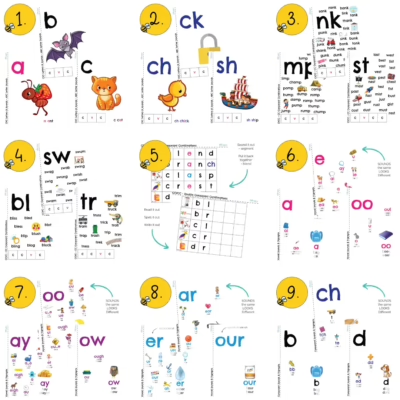


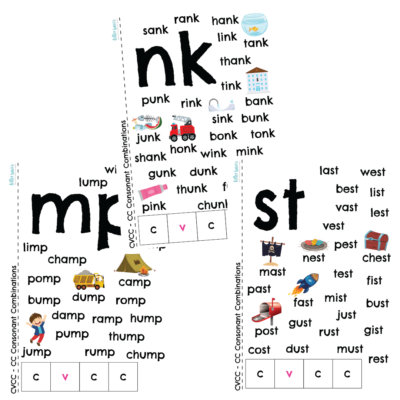


Bundle Stage 1-9: CVC Spelling Packs
Bundle and Save! Our Interactive CVC spelling, reading & writing packs are designed to help you confidently teach letter sounds, phonics, digraphs, blending and segmenting. They are a ‘must have’ for every parent, teacher or speechie and are perfect for keeping kids engaged and learning through play as they interact with the reusable CVC spelling, reading & writing activities.
Frequently Asked Questions
What are the signs of a fluent reader?
Signs of developing reading fluency include accurate word reading, recognising familiar words automatically, smoother reading, meaningful phrasing, appropriate expression and increased attention to comprehension.
Should a fluent reader still sound out words?
Yes.
Fluent readers still encounter unfamiliar words.
The important difference is that familiar words become increasingly automatic while phonics and decoding strategies remain available for unfamiliar words.
Does reading faster mean my child is becoming a better reader?
Not necessarily.
Fluency involves more than reading speed.
Accuracy, automaticity, appropriate phrasing, expression and comprehension are all important.
How can I improve my child’s reading fluency?
Regular reading practice, rereading familiar texts, modelling fluent reading, echo reading and continuing explicit phonics instruction can all provide useful opportunities to develop fluency.
When should children become fluent readers?
There is no single age when every child becomes fluent.
Reading fluency develops progressively as children build decoding skills, automatic word recognition and experience with increasingly complex texts.
Related Reading
- Oral Reading vs Silent Reading
- Why Reading Slowly Isn’t Always a Problem
- How to Improve Reading Fluency at Home (Simple Strategies That Really Work)
- Why Reading Gets Faster Over Time (And How to Help It Happen)
Recommended products
-

Alpacas with Maracas Play Pack
$3.00 -
Bundle Stage 1-9: CVC Spelling Packs
Original price was: $171.00.$59.00Current price is: $59.00. -

Hairy Maclary Play Pack
$3.00 -
I’m Australian Too Play Pack
$3.00 -

Little Phonics Adventures Animal Friends Colouring Book
$3.00 -

Little Phonics Adventures Finger Puppets and Play Book: A
$5.00 -
Stage 1 Pack: CVC Words and Letter Sounds
Original price was: $19.00.$9.00Current price is: $9.00. -

Stage 1-9 Placemat: Aussie Phonics & Digraphs
$9.00 -

Who Sank the Boat Play Pack
$3.00
