

When children are learning to read, parents often wonder whether they should encourage them to read aloud or give them opportunities to read silently.
The answer is: children benefit from both.
Oral reading and silent reading are related, but they are not exactly the same skill.
For children who are still developing decoding, word recognition and reading fluency, reading aloud can provide valuable opportunities to practise.
As children become more confident readers, silent reading becomes increasingly important too.
So, rather than choosing between oral reading vs silent reading, it can be helpful to think about when and why we use each type of reading.
Oral Reading vs Silent Reading: Which Is Better for Children?
If you’ve ever wondered whether your child should be reading aloud or reading silently, you’re not alone.
When children are learning to read, it’s easy to feel as though there is a “right” way to practise.
Should you listen while they sound out every word?
Should you encourage them to read quietly by themselves?
Or is it better to simply sit together and enjoy a book?
The good news is that both oral reading and silent reading have an important place in a child’s reading journey.
For beginning readers, reading aloud provides valuable opportunities to practise decoding, word recognition and fluency.
As reading becomes more automatic, silent reading gives children the freedom to explore books independently and read at their own pace.
Rather than choosing one over the other, let’s look at how oral reading and silent reading support developing readers — and how you can naturally include both at home.
What Is Oral Reading?
Oral reading is simply reading text out loud.
A child might read:
- a decodable book aloud
- a sentence from a worksheet
- a favourite picture book
- a short story
- a list of words
- a sign or label
- a sentence they have written themselves
For children learning to read, oral reading gives parents and educators an opportunity to hear how a child is approaching the words on the page.
You may notice whether your child is:
- sounding out unfamiliar words
- recognising familiar words automatically
- using their knowledge of letter-sound relationships
- paying attention to punctuation
- reading word by word
- beginning to group words into phrases
- rereading when something doesn’t make sense
The Australian Curriculum describes fluency as becoming progressively faster, smoother, more accurate and expressive when reading aloud.
This makes oral reading particularly useful while children are developing foundational reading skills.
What Is Silent Reading?
Silent reading is reading without saying the words aloud.
A child may read silently when looking through a book independently, reading instructions, exploring a comic, researching a topic or eventually reading a longer chapter book.
Silent reading allows children to focus on the meaning of the text without needing to produce the words verbally.
As children become more proficient readers, silent reading becomes an increasingly important part of everyday reading.
After all, most of the reading adults do throughout the day is silent!
Free Printable Placemat

Stage 2 Placemat: Beginners Digraphs
A fun consonant diagraphs resource for beginners learning to read, write and spell! Includes voiced and unvoiced ‘th’ digraphs.
Oral Reading vs Silent Reading: What’s the Difference?
Although both involve reading written language, there are some practical differences.
| Oral Reading | Silent Reading |
|---|---|
| Words are spoken aloud | Words are read without speaking |
| Allows an adult to hear the child’s reading | Gives the child greater independence |
| Provides opportunities to practise fluency | Supports independent reading |
| Makes decoding strategies easier to observe | Allows the reader to focus privately on meaning |
| Can support repeated reading | Can allow reading at a personally comfortable pace |
| Useful for developing early reading skills | Becomes increasingly important as reading develops |
Research suggests that oral and silent reading are closely related but distinct aspects of reading fluency.
A study of first-grade readers found that oral and silent reading fluency were related, but represented distinguishable skills.
This is one reason it is useful to give children opportunities to practise both.
Why Is Reading Aloud Helpful for Beginning Readers?
For a child who is learning phonics and decoding, reading aloud can be particularly valuable.
When a child says a word aloud, you can hear what is happening as they read.
For example, imagine a child sees:
c-a-t
They might:
/c/ /a/ /t/ → cat
Or they may recognise cat immediately because the word has become familiar.
Both responses tell us something about their developing word-reading skills.
Reading aloud also gives children opportunities to practise accuracy and fluency.
The National Reading Panel found that guided repeated oral reading, where children receive guidance and feedback from teachers, peers or parents, had positive effects on word recognition, fluency and comprehension.
That doesn’t mean children need to read aloud for long periods every day.
A few minutes of enjoyable, supported reading can be enough to provide useful practice.
Does Reading Aloud Improve Reading Fluency?
It can help.
Reading fluency involves being able to read accurately, smoothly and with appropriate expression.
When children repeatedly encounter familiar words and patterns, reading can gradually become more automatic.
For example, a beginning reader might initially need to sound out:
s-h-i-p
With practice, ship may eventually be recognised much more quickly.
This frees up cognitive attention for thinking about the meaning of the sentence rather than concentrating on every individual sound.
The Australian Curriculum places fluency alongside phonological awareness, phonic knowledge and word recognition, and understanding texts within the development of literacy.
Is Silent Reading Better for Comprehension?
Not necessarily.
Reading comprehension isn’t determined simply by whether a child reads aloud or silently.
A child’s ability to understand what they read depends on many factors, including:
- word recognition
- decoding
- vocabulary
- background knowledge
- language comprehension
- reading fluency
- attention
- knowledge of the topic
- ability to make connections and inferences
Research examining oral and silent reading has found relationships between reading fluency and comprehension, but the relationship can vary depending on the reader’s age and reading ability.
So if your child understands a story better when reading it aloud, there’s no reason to insist that they read silently.
Likewise, if your confident reader prefers to curl up with a book and read independently, there’s no need to make them read every page aloud.
Should Beginning Readers Read Silently?
You might notice a young child attempting to read silently, particularly if they have watched older siblings or adults reading.
That’s perfectly fine.
However, when a child is still learning to decode, some oral reading practice can be especially useful.
Reading aloud allows you to hear what they are doing and provide support when needed.
It also gives children the opportunity to practise connecting:
letters → sounds → words → sentences → meaning
For example:
m-a-p → map
then:
I see a map.
Eventually, reading these words can become increasingly automatic.
When Should Children Start Reading Silently?
There isn’t one particular age when every child should suddenly switch from oral reading to silent reading.
Children develop at different rates.
A child might begin by reading individual words aloud, then short sentences, then simple books.
As their reading becomes more automatic, they may naturally begin reading some material silently.
Rather than setting a rule such as “You are old enough to read silently now,” it can be more helpful to provide opportunities for both.
You might say:
“Would you like to read this one aloud together, or have a quiet look through it yourself?”
Giving children some choice can make reading feel more enjoyable and less like a test.
5 Easy Ways to Practise Oral Reading at Home
Oral reading doesn’t need to feel like a formal lesson.
1. Read a decodable book together
Choose a book that contains phonics patterns your child has been learning.
Let your child read the parts they can manage while you provide support when needed.
2. Reread a favourite book
Children often love repetition.
Reading the same short book several times gives children opportunities to become more familiar with the words and develop smoother reading.
3. Take turns reading
You could read one sentence and your child read the next.
This can make a longer text feel much more manageable.
4. Read environmental print
Look for reading opportunities during everyday life.
Try:
- signs
- menus
- labels
- shopping lists
- packaging
- maps
- street names
Reading doesn’t have to happen at a desk.
5. Let children read things they actually enjoy
A child who loves dinosaurs might be much more motivated to read a dinosaur fact sheet than a random reading passage.
Interest can be a wonderful invitation into reading.
5 Ways to Encourage Silent Reading
Silent reading can also be introduced naturally.
1. Create quiet reading time
Give your child a little time to explore books independently.
They don’t have to finish a book or read a certain number of pages.
2. Let them choose the book
Choice can make independent reading much more appealing.
3. Include comics and non-fiction
Silent reading doesn’t have to mean chapter books.
Comics, fact books, magazines and simple information texts all provide reading opportunities.
4. Model silent reading yourself
Children notice what adults do.
Seeing you enjoying a book, magazine or article quietly can demonstrate that reading is something people do for pleasure and information.
5. Don’t turn every book into a comprehension test
Sometimes reading can simply be reading.
You don’t need to ask your child a series of questions after every page.
A natural conversation such as:
“What did you think of that?”
can be enough.
What If My Child Only Wants to Read Aloud?
That’s okay.
If your child is still developing reading skills, oral reading can be an important part of their practice.
You can gradually introduce quiet reading alongside it.
For example:
“Let’s read this page together, and then you can have a quiet look at the next page.”
The goal isn’t to eliminate oral reading.
It’s to gradually help children become comfortable with different ways of engaging with text.
What If My Child Refuses to Read Aloud?
Some children become uncomfortable when asked to read aloud, particularly if they feel they are being watched, corrected or tested.
Instead of turning reading aloud into a performance, try keeping it relaxed.
You could:
- read together
- take turns
- let your child choose the book
- read familiar books
- allow them to practise privately first
- stop before reading becomes frustrating
- celebrate effort rather than speed
A child does not need to read quickly to be developing as a reader.
Accuracy, confidence, understanding and enjoyment matter too.
Oral Reading vs Silent Reading: You Don’t Have to Choose
When it comes to oral reading vs silent reading, there isn’t a need to choose one as the “right” way to read.
For children learning to read, oral reading provides valuable opportunities to practise decoding, word recognition and fluency — and allows adults to hear and support their developing skills.
Silent reading provides opportunities for children to develop independence and engage with texts without needing to say every word aloud.
Both have a place.
The Australian Curriculum aims for students to become proficient readers who can read, understand and engage with increasingly complex texts for different purposes.
So at home, try to make room for both reading aloud and reading quietly.
Some days that might look like a short decodable book read together.
Other days it might be your child quietly looking through a favourite book.
And sometimes the best reading practice might simply be curling up together and enjoying a story.
Frequently Asked Questions
Is oral reading better than silent reading?
Neither is universally better.
Oral and silent reading are related but distinct aspects of reading.
Beginning readers can benefit from supported oral reading, while silent reading becomes increasingly important as children develop independence and fluency.
Should children read aloud every day?
Regular reading practice can be helpful, but it doesn’t need to be long or formal.
Short, enjoyable reading experiences can provide valuable practice.
What age should children start silent reading?
There is no single age that applies to every child.
Children can be offered opportunities for silent reading as their reading skills and confidence develop.
Does reading aloud improve fluency?
Supported and repeated oral reading can help develop word recognition and reading fluency.
Research has found positive effects from guided repeated oral reading.
Should I correct every reading mistake?
Not necessarily.
Too much interruption can make reading feel stressful.
Where appropriate, give your child time to work through a word, offer a prompt or model the word, and keep the focus on meaning as well as accuracy.
What is the best way to practise reading at home?
Regular, enjoyable reading is a great place to start.
Combine supported oral reading, independent reading, rereading familiar texts and plenty of opportunities to talk about books.
CVC at Home Reading & Spelling Program
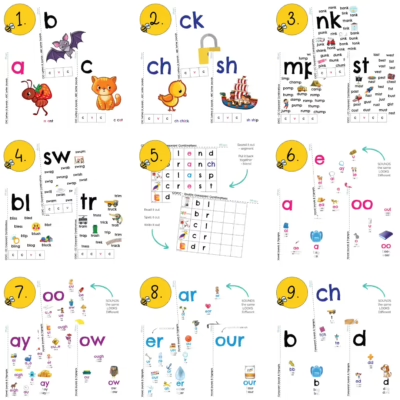


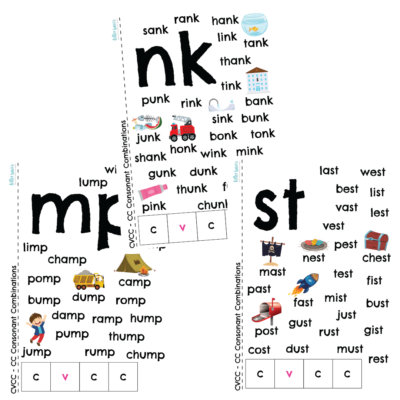


Bundle Stage 1-9: CVC Spelling Packs
Bundle and Save! Our Interactive CVC spelling, reading & writing packs are designed to help you confidently teach letter sounds, phonics, digraphs, blending and segmenting. They are a ‘must have’ for every parent, teacher or speechie and are perfect for keeping kids engaged and learning through play as they interact with the reusable CVC spelling, reading & writing activities.
Oral Reading vs Silent Reading: Which Is Better for Children?
Oral reading and silent reading both matter.
For children learning to read, reading aloud can provide valuable practice with decoding and fluency while giving parents insight into how their child is approaching text.
As children become more confident, silent reading gives them increasing independence and allows them to read for pleasure, information and learning.
Rather than worrying about whether your child should be reading aloud or silently, look for opportunities to enjoy both.
Because ultimately, the goal isn’t simply to make a child read the words on the page.
It’s to help them become a confident, capable and enthusiastic reader.
Related Reading
- How to Improve Reading Fluency at Home
- Why Reading Slowly Isn’t Always a Problem
- Why Reading Gets Faster Over Time (And How to Help It Happen)
- Learn to Read at Home Without Overwhelm
Recommended products
-
Bundle Stage 1-9: CVC Spelling Packs
Original price was: $171.00.$59.00Current price is: $59.00. -
Stage 9 Pack: Tricky Consonant Spellings
Original price was: $19.00.$9.00Current price is: $9.00. -
Stage 8 Pack: R Controlled Vowel Digraphs
Original price was: $19.00.$9.00Current price is: $9.00. -
Dear Zoo Play Pack
$3.00 -
Guess How Much I Love You Play Pack
$3.00 -
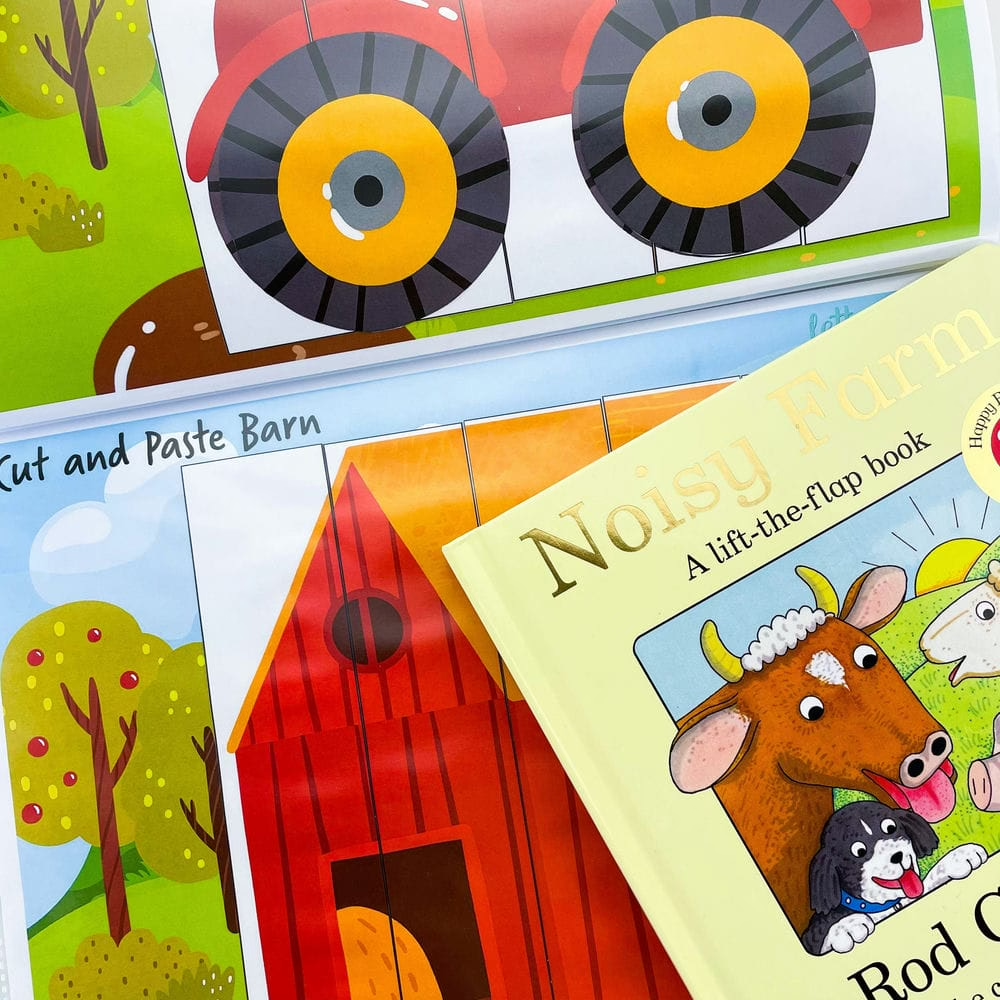
Noisy Farm Play Pack
$3.00 -

Piranhas Don’t Eat Bananas Play Pack
$3.00

